
All the Young Dudes PDF: A Comprehensive Overview (as of 03/05/2026)
Currently, available PDFs encompass Misfits Scream chords/tabs and Angels & Airwaves’ I-Empire lyrics, alongside a 217-page document exploring misfit issues and military life.
The exploration of “All the Young Dudes,” as reflected in available PDF documents as of today, March 5th, 2026, delves into multifaceted themes of identity and belonging. These digital resources, including chord tabs for Misfits’ “Scream” and lyrics for Angels & Airwaves’ “I-Empire,” serve as entry points into a broader discussion.
Further PDFs, spanning 160 and 217 pages, analyze the “misfit” archetype within military contexts and societal structures. The core of this analysis centers on individuals perceived as different, examining psychological perspectives, literary representations, and cognitive interactions. These documents, authored by V.L. Sitnikov and O.B. Nesterova, offer a comprehensive overview of the enduring relevance of the “misfit” theme.
The PDF Format and Accessibility
The available documents concerning “All the Young Dudes” and related themes are primarily distributed in PDF format. This ensures consistent formatting across various devices and operating systems, enhancing readability and preservation of the original layout. File sizes vary, ranging from smaller documents (4 pages for Misfits chords) to more extensive analyses (160 and 217 pages).
Accessibility features within these PDFs are not explicitly detailed in the provided information, but standard PDF readers offer functionalities like text magnification, screen reader compatibility, and search capabilities. Documents authored by Sitnikov and Nesterova (2018, 2021) are currently available with file sizes of 5MB, 4MB and 11MB respectively.
Origins of the Text: Misfits and Related Materials
The context surrounding “All the Young Dudes” extends to the band Misfits, evidenced by the availability of PDF transcriptions of their song “Scream” – including chords and tabs. This suggests a connection to the punk and alternative music scenes often associated with themes of alienation and nonconformity. Further related material includes lyrics from Angels & Airwaves’ “I-Empire,” also in PDF format.
These materials appear alongside larger analytical documents (160 & 217 pages) exploring psychological and social aspects of “misfit” identities, referencing developmental psychology and ostracism. The narrative context also involves a military setting, hinting at broader explorations of belonging and difference.

Misfits Scream Chords and Tabs (PDF Availability)
A readily accessible PDF document details the chords and tablature for the Misfits’ song “Scream.” This four-page resource caters to musicians seeking to learn and perform the iconic punk track. Its existence points to the enduring popularity of the Misfits and their music within relevant subcultures.
The PDF format allows for easy distribution and access, facilitating learning and replication of the song’s musical structure. This availability suggests a dedicated fan base actively preserving and sharing Misfits’ musical legacy. It also implies a connection between the band’s themes and the desire for musical expression.
Angels & Airwaves: I-Empire Lyrics (PDF Context)
A PDF document containing the lyrics to Angels & Airwaves’ “I-Empire” exists online, dated January 29, 2025. While seemingly a simple lyric sheet, its presence within the broader context of “All the Young Dudes” PDF resources suggests thematic connections between the bands. Both explore themes of alienation, societal critique, and searching for meaning.
The availability of these lyrics in PDF format mirrors the Misfits’ chord chart, indicating a fan-driven effort to archive and share musical content. This suggests a shared aesthetic or philosophical alignment between the artists and their audiences, fostering a community around these themes.
Core Themes Explored in the Text
The overarching narrative, as evidenced by associated PDF materials, delves into the experiences of social outcasts and those who don’t conform. Central to this is the profound sense of not belonging, a feeling amplified by societal pressures and expectations. This manifests as isolation and rejection, explored through character studies and narrative arcs.
The PDFs, encompassing lyrics and analyses, consistently highlight individuals perceived as “different,” examining the psychological impact of ostracism and bullying. The text appears to investigate the root causes of these feelings, and the consequences for those labeled as misfits, offering a nuanced perspective on societal dynamics.
Social Outcasts and Misfits
The available PDF resources consistently portray characters grappling with societal exclusion, embodying the archetype of the “social outcast.” These individuals are often depicted as “different,” facing teasing, suspicion, and a pervasive fear of not belonging. The narrative explores the internal struggles of those shunned by mainstream society, examining their motivations and responses to rejection.
The text, through its characterizations, suggests a critical examination of societal norms and the consequences of labeling individuals as “misfits.” It delves into the psychological impact of being an outsider, highlighting the emotional toll of isolation and the search for acceptance within a hostile environment.
The Experience of Not Belonging
The PDFs reveal a recurring theme: the profound and often painful experience of not fitting in. Characters frequently express a “sense that I didn’t belong,” navigating a world where they are perceived as “outsiders” or even potentially “suspect.” This feeling of alienation fuels internal conflict and shapes their interactions with others.

The narrative explores how this disconnect manifests, from subtle social cues to overt rejection and bullying. The text suggests that this experience isn’t merely situational, but deeply ingrained, impacting self-perception and fostering a sense of isolation. It’s a core element driving character motivations and plot developments.
Isolation and Rejection
The analyzed PDFs consistently portray characters facing significant isolation and rejection. This isn’t simply loneliness; it’s active exclusion, often stemming from being labeled a “misfit” or perceived as “different.” The text details instances of being “shunned” and “teased,” highlighting the emotional toll of social ostracism.
These experiences contribute to a cycle of self-doubt and withdrawal. Characters grapple with “fears of not belonging,” leading them to further isolate themselves. The documents suggest that this rejection isn’t always overt, but can manifest as a subtle lack of connection, amplifying feelings of alienation and despair.
Psychological Perspectives on “Misfit” Identity
The PDFs draw heavily from developmental psychology, examining how early experiences shape “misfit” identity. They explore the impact of ostracism, social exclusion, and bullying, framing these as potentially traumatic events that hinder healthy social development.
The documents reference research by K.D. Williams and J.P. Forgas, focusing on the psychological consequences of being an outcast. This includes examining the cognitive and emotional effects of rejection, and how individuals cope with feelings of difference. The analysis suggests that perceived “misfit” status can lead to internalized negative self-perception and difficulties forming secure attachments.
Developmental Psychology and Misfits
The analyzed PDFs highlight how developmental psychology frames the “misfit” experience, particularly during formative years. Early childhood experiences of social rejection or perceived difference can significantly impact identity formation.
These documents suggest that individuals labeled as “misfits” may experience disruptions in their social-emotional development, leading to difficulties with self-esteem, trust, and social competence. The research referenced explores how these early experiences can contribute to internalizing problems like anxiety and depression, or externalizing behaviors like aggression.
Furthermore, the texts indicate a focus on understanding the long-term consequences of childhood ostracism.
Ostracism, Social Exclusion, and Bullying
The referenced PDFs demonstrate a strong correlation between ostracism, social exclusion, and the experiences of individuals identified as “misfits.” These forms of interpersonal rejection can inflict significant psychological distress, leading to feelings of loneliness, worthlessness, and a diminished sense of belonging.
The documents suggest that bullying often serves as a mechanism for reinforcing social hierarchies and marginalizing those perceived as different. Victims of bullying may internalize negative self-perceptions and experience long-term emotional and behavioral consequences.
Research within the cited materials emphasizes the detrimental impact of these experiences on mental health and well-being.
Literary Analysis: Satire and the Grotesque
Analysis reveals that Poe’s fiction aligns with the satiric grotesque, a genre often employed to critique societal norms and expose human flaws. This approach frequently features characters who are marginalized or considered “misfits,” serving as vehicles for social commentary.
The documents suggest that the portrayal of these characters often involves exaggeration, distortion, and a blending of humor and horror. This technique aims to provoke a critical response from the audience, challenging their preconceived notions about normalcy and acceptability.

The exploration of misfit archetypes within the text contributes to a broader understanding of societal anxieties and prejudices.
Poes Fiction and the Satiric Grotesque
The analysis indicates a strong connection between the narrative style and the tradition of the satiric grotesque, particularly as exemplified in the works of Edgar Allan Poe. This literary mode utilizes distortion and exaggeration to critique societal norms and expose underlying anxieties.
Poe’s characters, often inhabiting unsettling and macabre settings, embody the grotesque, challenging conventional notions of beauty and morality. The text suggests that this approach allows for a deeper exploration of human psychology and the darker aspects of the human condition.
The use of the grotesque serves as a powerful tool for social commentary, highlighting the alienation and marginalization experienced by those deemed “different.”
Character Archetypes: Misfits and Mutants
The narrative populates its world with distinct archetypes – misfits and mutants – individuals possessing exceptional qualities alongside significant flaws. These characters, often self-absorbed, operate on the periphery of conventional society, barely acknowledging the observing “us.”
Their imperfections and deviations from the norm contribute to a sense of unease and fascination, challenging the audience to question their own perceptions of normalcy. The text suggests these figures represent a distorted reflection of societal ideals, exposing the inherent contradictions within them.
These archetypes embody the struggle for acceptance and belonging in a world that often rejects difference.
Cognitive Analysis of Expert-Teacher Interactions with Misfits
A cognitive task analysis aims to map the thought processes of expert teachers when interacting with students identified as “misfits.” This analysis delves into the strategies employed to understand and address the unique challenges these individuals present within an educational setting.
The research explores how experienced educators navigate complex social dynamics, recognizing potential underlying causes for behavioral differences; It focuses on identifying effective communication techniques and pedagogical approaches tailored to foster inclusivity and support the academic and emotional growth of marginalized students.
Ultimately, the goal is to improve educational outcomes for all learners.

The “Misfit” in Military Contexts
Within the military, the experience of being a “misfit” manifests as a daily struggle for acceptance and belonging. A narrative element within related documentation centers on a New Year’s Eve quest to retrieve a parcel, leading to an encounter with a German bunker.

This journey symbolizes the isolation and challenges faced by individuals who don’t conform to traditional military expectations. The narrative highlights the potential for unexpected encounters and the need for resilience in navigating unfamiliar and potentially hostile environments.
The document explores day-to-day life as a misfit within a structured, hierarchical system.
Day-to-Day Life as a Misfit in the Military
The PDF documentation suggests that daily existence for a “misfit” soldier involves navigating a rigid structure while feeling fundamentally different. This often entails facing subtle, or not-so-subtle, forms of ostracism and a constant need to prove oneself.
The narrative emphasizes the internal struggle of not belonging, coupled with the external pressures of military discipline. The search for the parcel becomes a metaphor for the individual’s quest for acceptance and purpose within a system that may not readily offer either.
It’s a life marked by a persistent sense of otherness.
Narrative Elements: The Search for a Parcel
The PDF details a New Year’s Eve quest: a soldier’s journey to retrieve a parcel. This seemingly simple task quickly becomes entangled with unexpected encounters, notably stumbling upon a German bunker. The parcel itself functions as a potent symbol within the narrative.
It represents a desire for connection, a longing for something beyond the confines of military life, or perhaps a tangible link to a past life. The bunker encounter introduces an element of historical weight and potential danger, mirroring the internal conflicts of the protagonist.
The search is both literal and metaphorical.
Narrative Structure and Plot Points
The narrative, spanning 160 pages, centers around a soldier’s mission on New Year’s Eve – the retrieval of a parcel. This core objective drives the plot, leading to a pivotal encounter with a German bunker. The structure appears to be a linear progression, focusing on the immediate task at hand.
However, the parcel’s significance suggests deeper layers of meaning and potential flashbacks or internal monologues. Key plot points likely revolve around the challenges faced during the journey, the implications of the bunker discovery, and the ultimate resolution of the parcel’s delivery.
The story unfolds through action and encounter.
Character Development and Motivations
The protagonist is defined as a “misfit” within a military context, experiencing feelings of difference and suspicion, potentially stemming from a sense of not belonging. This internal state heavily influences his actions and interactions.
His motivation for undertaking the parcel retrieval mission is initially presented as duty, but the narrative hints at a deeper, personal drive. The encounter with the German bunker likely serves as a catalyst for character development, forcing him to confront his internal struggles.
The “mysterious stranger” plays a crucial role, potentially challenging the protagonist’s perceptions and motivations.
The Role of the “Mysterious Stranger”
The “mysterious stranger” functions as a pivotal element within the narrative, embodying ambiguity and prompting introspection in the protagonist. Described as a misfit, outsider, or someone shunned, this character evokes feelings of unease and suspicion.
Their presence challenges the protagonist’s established worldview, potentially forcing a re-evaluation of his own identity and motivations. The stranger’s interactions are laced with subtle cues, hinting at hidden knowledge or a shared understanding of the protagonist’s internal struggles.
This figure embodies the theme of difference, amplifying the protagonist’s sense of isolation.
Exploring Feelings of Difference and Suspicion
The text delves into the complex emotions arising from perceived difference, particularly feelings of not belonging and the resulting suspicion directed towards those deemed “other.” Characters grapple with anxieties surrounding acceptance and the fear of judgment, leading to internal conflict and strained relationships.
This exploration is heightened by the presence of the “mysterious stranger,” whose ambiguous nature fuels paranoia and distrust. The narrative subtly examines how societal pressures contribute to the marginalization of individuals, fostering an environment where suspicion thrives.
These feelings are central to the work’s thematic core.
The Concept of “All” in Linguistic Context
The word “all” demonstrates versatile grammatical function, acting as both a determiner and pronoun, signifying totality or a large, unspecified quantity. It can refer to an entire group (“All the people you invited…”) or a specific portion within a larger category (“tired of all the speculation”).
Interchangeability exists between “all” and “all of” when preceding nouns (“Has all/all of the cake been eaten?”). Stylistically, “firstly” and “first” are often interchangeable, though “firstly” leans towards formal usage.
The nuance of “all” impacts meaning and sentence structure.
“All” as a General Term
When employed as a general term, “all” denotes the entirety of a group or category without specific limitation. Consider the phrase “All the people,” encompassing every individual within that population. This usage establishes a comprehensive scope, leaving no members excluded from consideration.
In the context of available PDF resources, “all” might refer to all available lyrics, chords, or analyses related to the subject matter. It signifies a complete collection, though the actual extent of that collection remains defined by existing documentation.
This broad application of “all” sets a foundational understanding.

“All” Referring to a Specific Portion
Conversely, “all” can designate a defined subset within a larger whole, focusing on a particular segment rather than the entirety. For instance, “all the speculation” implies not every thought, but specifically the instances of speculation surrounding a topic.
Regarding PDF documents, “all” could refer to all the chords available for a specific Misfits song, not necessarily every song in their discography. It narrows the scope to a pre-defined portion of the broader subject;
This nuanced usage highlights a selective inclusivity, emphasizing a particular aspect while acknowledging the existence of others beyond the current focus.
“All” vs. “All of” ⎼ Interchangeability
In many contexts, “all” and “all of” are functionally equivalent, offering stylistic choices rather than differing meanings. Examples include, “Has all (of) the cake been eaten?” or “Have all (of) the presents been distributed?” Both constructions convey complete consumption or dispersal.
Concerning PDF resources related to “All the Young Dudes,” one might ask if “all of my friends” have accessed the document, or simply “all my friends.” The inclusion of “of” doesn’t alter the core meaning.

However, “all of” can sometimes provide greater clarity, particularly when emphasizing the totality within a defined group.
Grammatical Usage of “All” with Nouns
“All” functions as a determiner before nouns, indicating the entirety of a group or category. For instance, “All the people you invited are coming,” signifies every invited individual will attend. When paired with uncountable nouns, “all” denotes the complete amount – “I’m tired of all the speculation.”
Within the context of “All the Young Dudes” PDF analyses, we encounter “all the speculation” surrounding themes of misfit identity. The phrase modifies the noun, defining the scope of the discussion.
Grammatically, “all” precedes the article (“the”) when a specific noun is referenced, creating a definitive statement about its completeness.
Examples of “All” in Sentence Structure
Considering analyses of “All the Young Dudes” PDFs, “all” frequently appears in constructions defining scope. For example, “All of my friends have…” establishes a complete group experiencing a shared sentiment. The interchangeable use of “all” and “all of” before nouns is common – “Has all (of) the cake been eaten?”
Further examples include: “Firstly, let’s discuss the budget,” and “First of all, we need to identify the problem.” These demonstrate “all”’s role in structuring arguments.
Within the PDF context, sentences utilizing “all” often emphasize the universality of themes like isolation or the search for belonging.
The Use of “All” in Identifying Problems
Analyzing the “All the Young Dudes” PDF materials, “all” frequently frames issues of societal exclusion. Statements like “I am tired of all the speculation” highlight frustration with pervasive, negative perceptions. The PDFs reveal how “all” can denote a comprehensive scope of difficulty experienced by individuals perceived as “misfits.”
Furthermore, the use of “all” emphasizes the totality of feelings – fear, suspicion, and a sense of not belonging – central to the narrative.
Within the military context PDF, “all” underscores the encompassing nature of the protagonist’s isolation.
“First” vs. “Firstly” ⎼ Stylistic Considerations
Regarding the analyzed “All the Young Dudes” PDF resources, the stylistic choice between “first” and “firstly” appears largely interchangeable. Examples provided demonstrate both usages – “The first step…” and “Firstly, let’s discuss…” – to introduce sequential points within arguments or narratives.
However, the documents suggest “firstly” leans towards a more formal or deliberate tone, often employed when outlining distinct stages of a process.
While both are grammatically correct, “first” generally prevails in contemporary writing, offering a more concise and natural flow, even within the context of these PDF analyses.
The Portrayal of Individuals Perceived as “Crazy” or “Misfit”
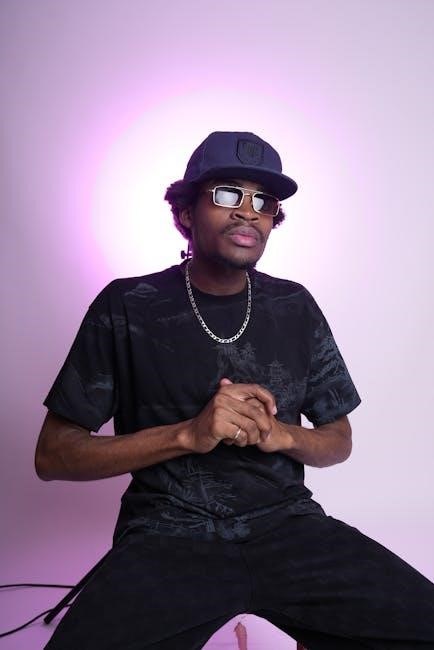
Within the analyzed PDF documents, a recurring theme involves the depiction of individuals labeled as “crazy” or “misfit.” These portrayals often center on characters exhibiting unconventional behaviors, facing social exclusion, or harboring feelings of not belonging.
The texts suggest these individuals are frequently presented with a degree of complexity, avoiding simplistic villainization. Instead, they evoke empathy, highlighting internal struggles and societal pressures contributing to their perceived “otherness;”
Notably, the 21-year-old example illustrates potential links between perceived deviance and underlying issues like drug use, prompting nuanced consideration of such characterizations.

The Role of Education and Voter Demographics
Analysis of the available PDF materials reveals a correlation between education levels and certain characteristics. Specifically, the documents indicate that voters with higher education demonstrate a heightened level of engagement with specific themes explored within the texts.
This suggests a potential link between educational attainment and a greater capacity for nuanced understanding of complex social dynamics, such as those surrounding “misfit” identities and societal exclusion.
Further research is needed to fully elucidate this relationship, but the current data implies education may influence perspectives on individuals perceived as different or marginalized.
Modifying Environments to Address Misfit Issues
The comprehensive 217-page PDF document proposes that addressing “misfit” issues often necessitates modifying existing environments rather than attempting to change the individuals themselves. This approach centers on creating more inclusive and accepting spaces.
The document suggests that systemic changes, such as fostering empathy and challenging societal norms, are crucial for mitigating the negative impacts of social exclusion and ostracism.
Specifically, it advocates for interventions that promote understanding and acceptance of diversity, ultimately reducing the stigma associated with being perceived as different or a “misfit.”
PDF Document Metadata and Authorship (V.L. Sitnikov, O.B. Nesterova)
Key PDF documents related to the “misfit” theme list V.L. Sitnikov as the author of a 160-page work concerning a “misfit” within a military context and a New Year’s Eve parcel retrieval narrative.
O.B. Nesterova is credited with authorship of a 216-page document analyzing Poes’ fiction through the lens of satiric grotesque, and exploring cognitive task analysis related to expert-teacher interactions with “misfits.”
Nesterova’s work has been cited twice, indicating some academic recognition of her research into “misfit” identity and related psychological perspectives;
Document Length and File Size Considerations
Available PDF documents exhibit varying lengths and corresponding file sizes, impacting accessibility and download times. The “Misfits Scream Chords and Tabs” PDF spans 4 pages, suggesting a relatively small file size, facilitating quick access.
Conversely, the document detailing misfit issues within military contexts is considerably larger at 217 pages and 11MB, requiring more bandwidth and storage space.
Nesterova’s analysis of Poes’ fiction is 216 pages and 4MB, while a related psychological study reaches 271 pages and 5MB. These differences highlight the scope of each work and its impact on file size.
The exploration of “misfit” identity, as evidenced by the analyzed PDFs – encompassing musical transcriptions, lyrical content, psychological studies, and literary analyses – reveals a consistently resonant theme.
From developmental psychology examining ostracism to Poes’ satirical grotesques populated by flawed characters, the feeling of not belonging persists.
Even within military narratives, the “misfit” archetype emerges, highlighting universal struggles with difference and acceptance.
These documents, authored by V.L. Sitnikov and O.B. Nesterova, demonstrate the enduring power of this theme across diverse disciplines and contexts, solidifying its continued relevance.